


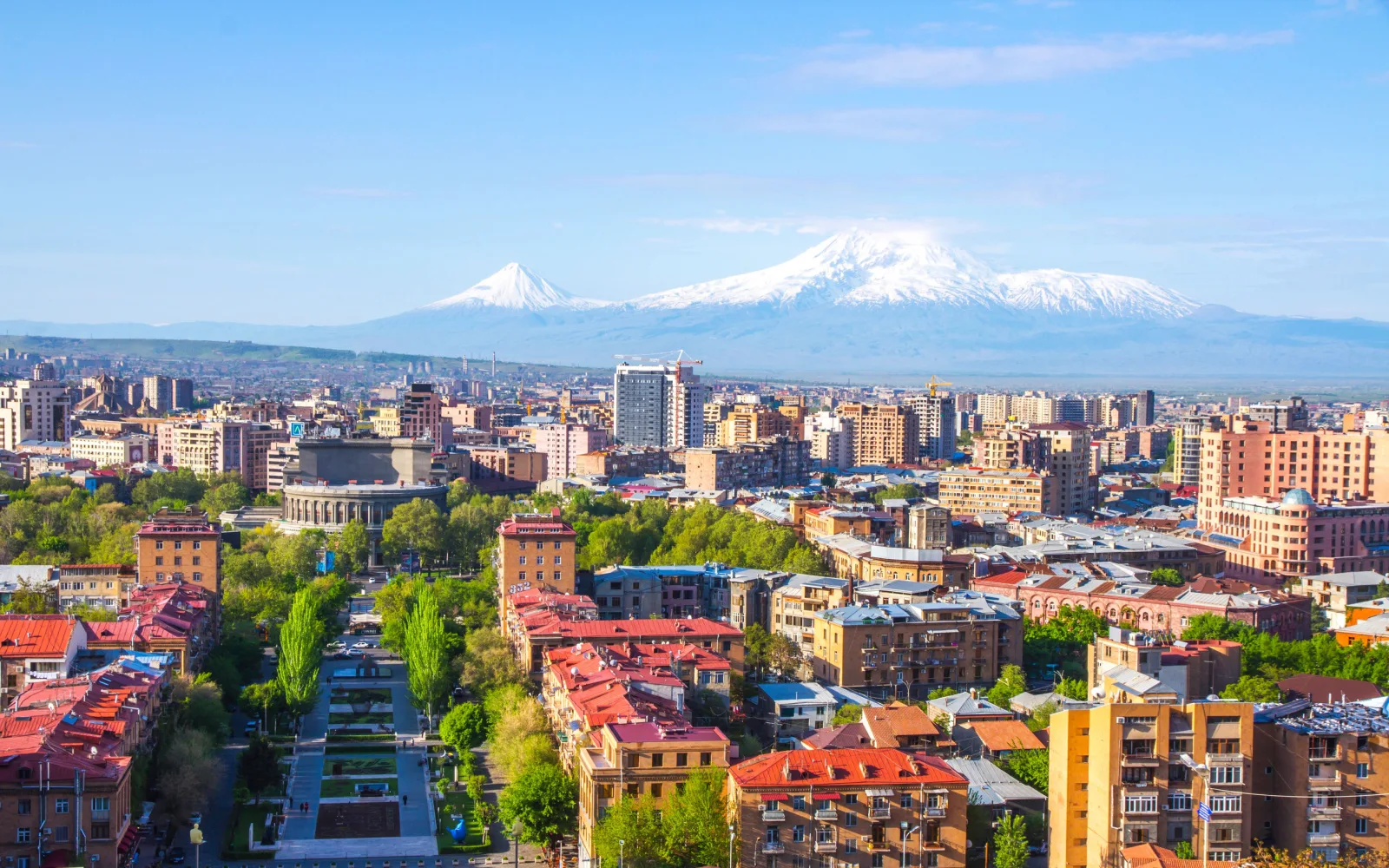
Every week, someone asks me some version of the same question. They’ve looked at flights, maybe read something online, maybe seen Armenia come up in the news a few years back. And before they commit to anything, they want to know: is it actually safe?
I’ve been running private tours out of Yerevan for years. I know this country’s roads, its border regions, its cities, its villages, and its rhythms. And my honest answer is always the same: yes, Armenia is safe to visit – and for most travelers, it turns out to be far safer, and far more comfortable, than they expected.
But “yes” on its own isn’t useful. So here is the fuller picture.
The Advisories, in Plain Language
Most travelers who do their research will come across official government travel advisories before they book. These are worth reading – but they are also worth reading carefully, because what they say and what they imply can be two very different things.
Canada currently rates Armenia at its lowest possible risk level for the vast majority of the country. The same rating it gives France, Japan, and Portugal. The United States rates Armenia at Level 2 — “exercise increased caution” — which is also the current rating for Germany and Italy. The United Kingdom advises standard travel precautions for Yerevan and all major tourist destinations.
Every single one of these advisories flags the same specific area: the eastern border region with Azerbaijan. Parts of Gegharkunik and Syunik closest to the Azerbaijani border remain sensitive, and the official advice is to avoid them. That is real, and it deserves to be stated clearly.
It is also a zone that the overwhelming majority of tourists never approach. The classic Armenian itinerary – Yerevan, Garni, Geghard, Lake Sevan, Dilijan, Tatev, Gyumri – sits entirely outside any restricted area. For anyone coming to see Armenia, the border situation is simply not part of the picture.
What Safety Actually Looks Like Here?
Armenia ranks in the top ten safest countries in the world on the Numbeo Safety Index, with a score of around 77.9. That number comes from a combination of crime statistics and lived perception — how safe people actually feel going about their daily lives. Many Western European capitals score lower.
Violent crime against tourists is genuinely rare. What does happen occasionally is low-level opportunistic theft — a phone left on a café table, a bag in an unlocked car, the usual situations that require the usual awareness. Nothing that would feel unfamiliar to anyone who has traveled in Europe or Central Asia.
What I notice with my own travelers, though, is something harder to put into statistics. Armenia’s hospitality is not a tourist industry product. It is cultural and it is old. People help strangers. They give directions without being asked. In small towns and villages, a foreign visitor is still something of an event – and the response is almost always warmth rather than indifference.
Russian travelers in particular have long had a special relationship with Armenia. Russian is spoken and understood widely across Yerevan – in restaurants, hotels, markets, and by most people you’d encounter on a standard trip. There is no language barrier to speak of, no awkward miming, no fumbling with translation apps. You arrive and you can simply talk to people. Combined with the visa-free entry, the short flight times from Moscow, St. Petersburg, and other major Russian cities, and the deeply familiar sense of hospitality – the generosity at the table, the insistence that you eat more, the neighbor who becomes a friend in an afternoon – Armenia feels accessible in a way that genuinely foreign destinations rarely do.
And yet it is foreign enough to feel like a real journey: its own ancient alphabet, its own wine traditions going back eight thousand years, its own landscapes that look like nowhere else. That combination – ease of arrival, depth of experience – is exactly why so many Russian travelers come once and book again before they’ve even left.
Getting Around
In Yerevan, the GG app handles most transport needs reliably – fixed fares, trackable rides, no negotiating. Yandex works well too. Street taxis without an app are fine but inconsistent on price; worth skipping if you have your phone.
Outside the capital, the road situation depends almost entirely on where you are going. The main highways between cities are in good shape. The moment you turn onto secondary mountain roads – and in Armenia, the most interesting places are often reached by secondary mountain roads – conditions change. Uneven surfaces, limited lighting, no lane markings, and in winter months from November through February, ice and snow that clears slowly if at all. For anyone planning to visit remote monasteries, hike in the highlands, or explore villages beyond the main routes, a 4WD is the right choice and driving after dark is something to avoid.
For adventure activities – trekking, climbing, canyon routes – the experiences here are excellent and the landscapes are extraordinary. Trail marking is uneven. Weather in the mountains shifts quickly. Go with a guide who knows the area, and get insurance that covers mountain rescue. Not because something is likely to go wrong, but because the terrain demands respect.
The Everyday Practicalities
Armenian food is safe, abundant, and genuinely one of the pleasures of visiting. Family restaurants and local cafés across the country maintain good standards, and the cuisine itself – built around fresh herbs, grilled meats, lavash, and seasonal produce – is a reason to travel here in its own right. Tap water in Yerevan is drinkable; most locals drink it. Bottled water is everywhere if you prefer it.
Medical care in Yerevan is adequate for most situations. Outside the capital, the level of available services drops, and for anyone spending time in remote areas, travel insurance with medical evacuation coverage is a serious recommendation. Not a precaution for the sake of it – genuinely useful if something goes wrong far from a city.
A few things that catch travelers off guard. Drug laws in Armenia are strict and consistently enforced: cannabis, CBD, and THC products are all illegal, including for medical use, and airport scanning technology is effective. Photographing military installations, border infrastructure, or certain sensitive facilities is prohibited and has resulted in detentions. Drink-driving operates on a zero-tolerance policy – the legal limit is 0.0% blood alcohol – and the penalties are real.
Emergency numbers: 102 for police, 103 for ambulance, 101 for fire, 112 for general emergencies.
Who Comes Here, and Why They Come Back?
Solo travelers find Yerevan walkable, sociable, and easy to navigate. Women traveling alone consistently report feeling comfortable in the city and in tourist areas. Families are welcomed openly – Armenians are visibly fond of children, and the range of outdoor and cultural activities that work for kids is wide. History travelers, wine enthusiasts, hikers, and photographers all tend to leave with the same observation: there was more here than they anticipated.
The country rewards depth. A week spent with a local who knows which road leads where, which monastery is rarely visited, which winery is worth the detour – that is a different trip entirely from one assembled from a list.
Plan It Right
Armenia is not a complicated country to visit, but it is one where local knowledge makes a genuine difference. The places worth seeing are not always the ones that appear first in a search, and the roads that lead to them are not always on a standard map.
Happy Holidays Armenia is a private tour agency based in Yerevan. We build tailor-made private tours for individuals, couples, families, and small groups — built around what you actually want to see, not a fixed itinerary designed for everyone.
Every guide is local. Every route is personal. Every tour is private.
Browse tours and get in touch at happyholidays.am




Comment (0)