


Geghard Monastery is one of Armenia’s most treasured historical and religious landmarks. Nestled in the scenic Azat River Gorge, this UNESCO World Heritage Site is renowned for its medieval architecture, churches carved directly into the rock and centuries of spiritual significance. Today, Geghard remains one of the most visited destinations in Armenia and an essential stop for travelers exploring the country’s cultural heritage. Geghard is a medieval, cave-carved monastery located about an hour’s drive from Yerevan.
According to legend, the first Catholicos of Armenia, Gregory the Illuminator, established a chapel here at the beginning of the 4th century, as a sacred spring was flowing directly from the rocks. Later, the Zakarian noble family ordered the construction of a larger church in 1215. The monastery was originally named Ayrivank, which is translated as “Cave Monastery.”
The complex consists of three chapels and two floors. The second floor is entirely carved into the rock, and thanks to its marvelous acoustics, it is still used today for performances of Armenian spiritual songs. The first floor is divided into four parts:
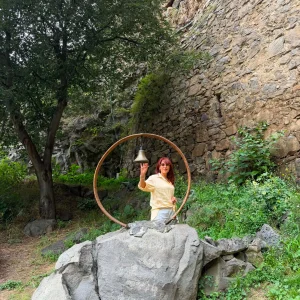
- the gavit (entrance hall and belfry),
- the St. Avazan Church, where the sacred spring flows,
- the cemetery of the noble family who built the monastery, which also includes an altar dedicated to the Holy Mother of God,
- and the main Katoghike Church, where the liturgies are held.


According to Armenian tradition, the monastery received the name Geghard (translated as spear) in honor of the Holy Spear that pierced the body of Jesus during the Crucifixion. The spear was brought to Armenia by the Apostle Thaddeus in the 1st century AD and was kept at the monastery until the 13th century.
It is now preserved in Echmiadzin Cathedra’s treasury among the other holy relics of Armenia.
Geghard is especially known for its architecture. Many of its chapels and tombs are carved directly into the surrounding cliffs, looking harmoniously with the surrounding natural cliffs.
In the 13th century, under the patronage of the Zakarian family, the monastery was enriched with donations and expanded with new constructions. In later years, monks’ cells were also built, giving the complex the appearance of a fortified castle.
Geghard Monastery was also a medieval educational and cultural center, attracting scholars, scribes, and musicians. Its spiritual, artistic, and architectural significance earned it a place on the UNESCO World Heritage List in 2000.
Today, Geghard is not just a historic monument — it remains an active religious site, a place of pilgrimage, and a powerful symbol of Armenia’s enduring Christian faith and cultural heritage.
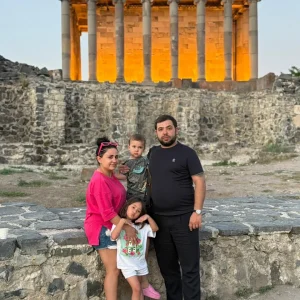
Most visitors explore Geghard Monastery together with Garni Temple, one of Armenia’s most iconic landmarks. Discover both sites on our Garni & Geghard Tour here.


Comments (3)