from 9 reviews
5 hours
Daily Tour
Armenian, English, Russian



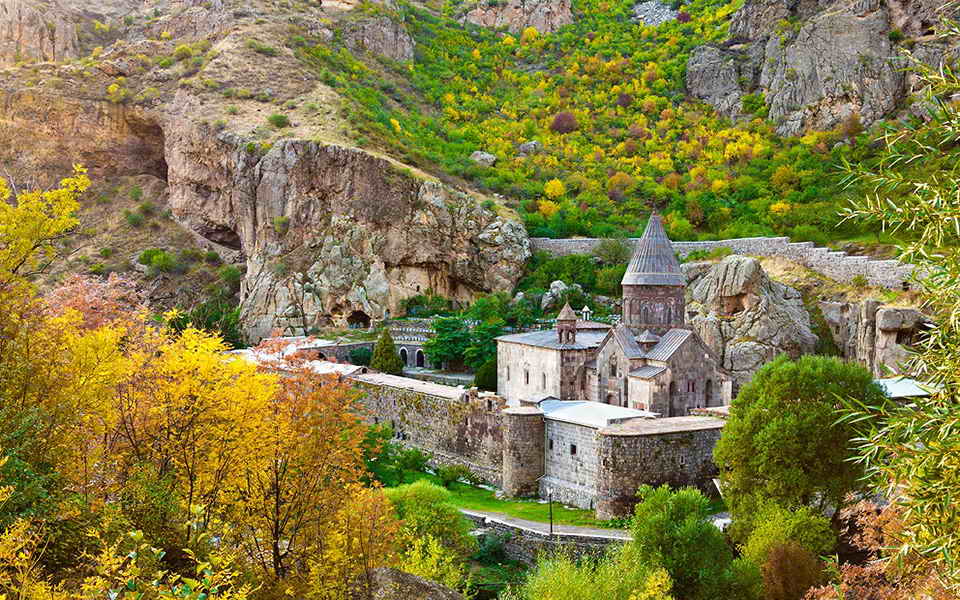
Explore Garni Temple, Geghard Monastery and the Symphony of Stones on a private half-day tour from Yerevan. This 5-hour Garni and Geghard tour combines two of Armenia’s most important historical landmarks with the dramatic basalt formations of the Azat Gorge.
Your private guide and driver will pick you up from your hotel in Yerevan and take you to the Arch of Charents, Garni Temple, the Symphony of Stones and UNESCO-listed Geghard Monastery. With a private vehicle and guide, you can explore at a comfortable pace without waiting for a large group or following a rigid schedule.
This tour is ideal for first-time visitors looking for a private Garni and Geghard tour from Yerevan that combines Armenian history, architecture and nature in one easy half-day trip.
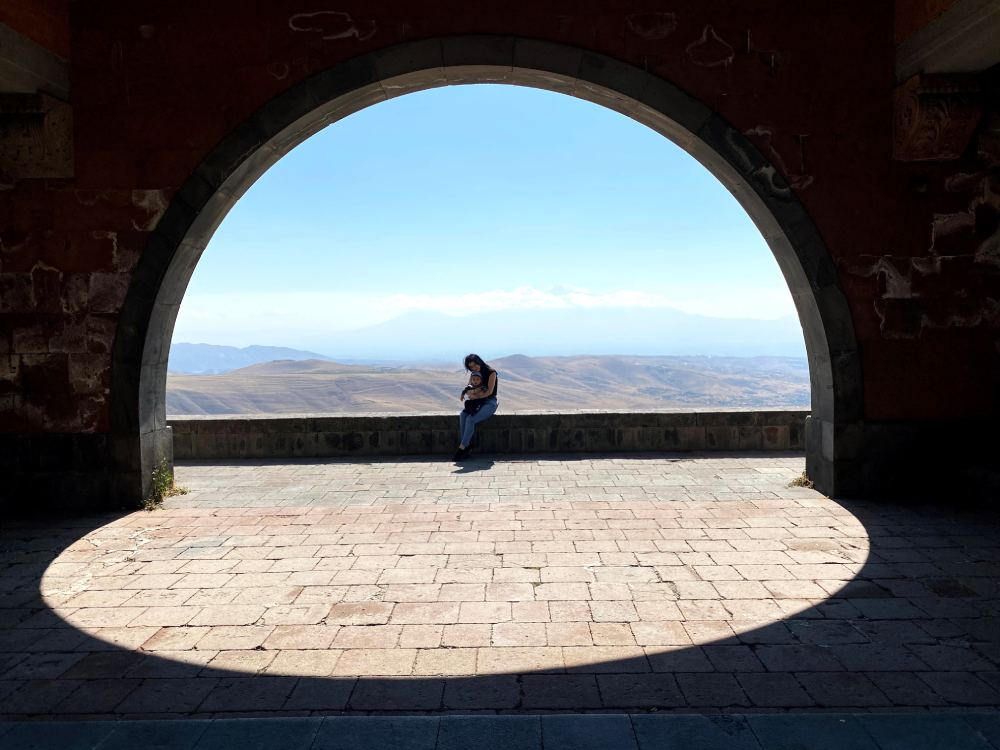
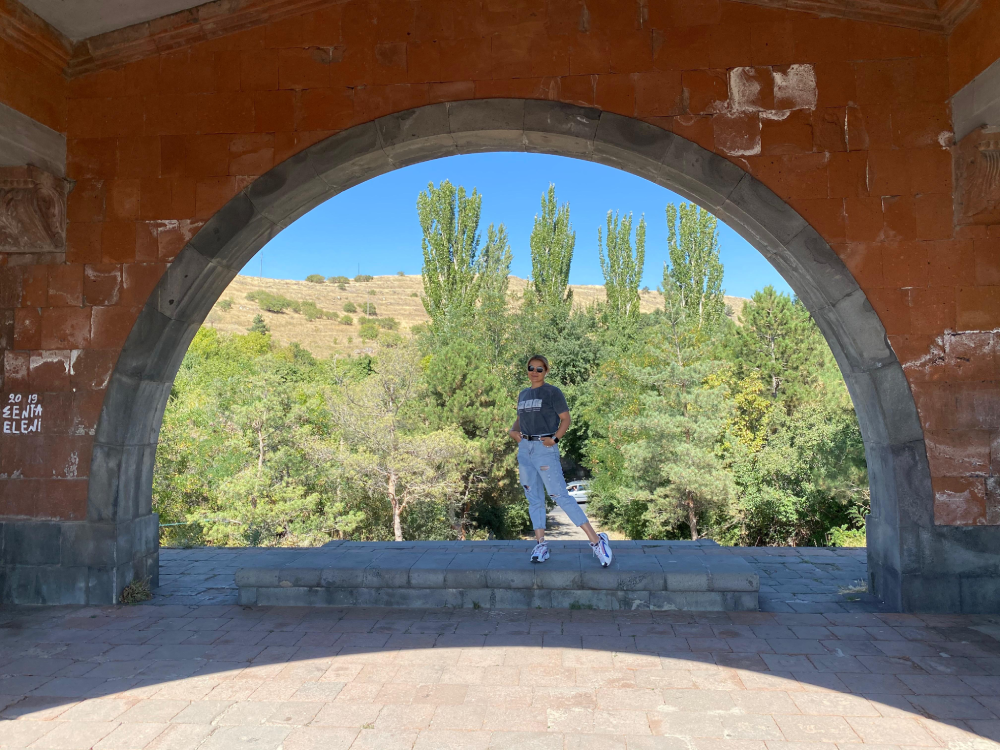
1.Our first stop is the Arch of Charents, also known as the Arch of Ararat. This is a unique sightseeing spot from where one can have a breathtaking view of the biblical Mount Ararat.
2.The second stop is the Garni Pagan Temple. Garni is the only preserved Greco-Roman temple in Armenia. Built in the 1st century AD, it was dedicated to the sun god Mihr before Armenia adopted Christianity. Later, it served as a summer residence for Armenian kings. Perched above the dramatic Azat Gorge, the temple offers breathtaking panoramic views and remains one of the country’s most iconic historical landmarks.
3. After visiting Garni Temple, we’ll descend into the Azat Gorge to explore the Symphony of Stones. This remarkable natural monument consists of thousands of perfectly shaped hexagonal basalt columns formed by volcanic activity millions of years ago. Rising up to 50 metres high, the formations resemble the pipes of a giant organ, which is why the site is also known as the Basalt Organ. A walk through the gorge along the Azat River is one of the highlights of this tour.
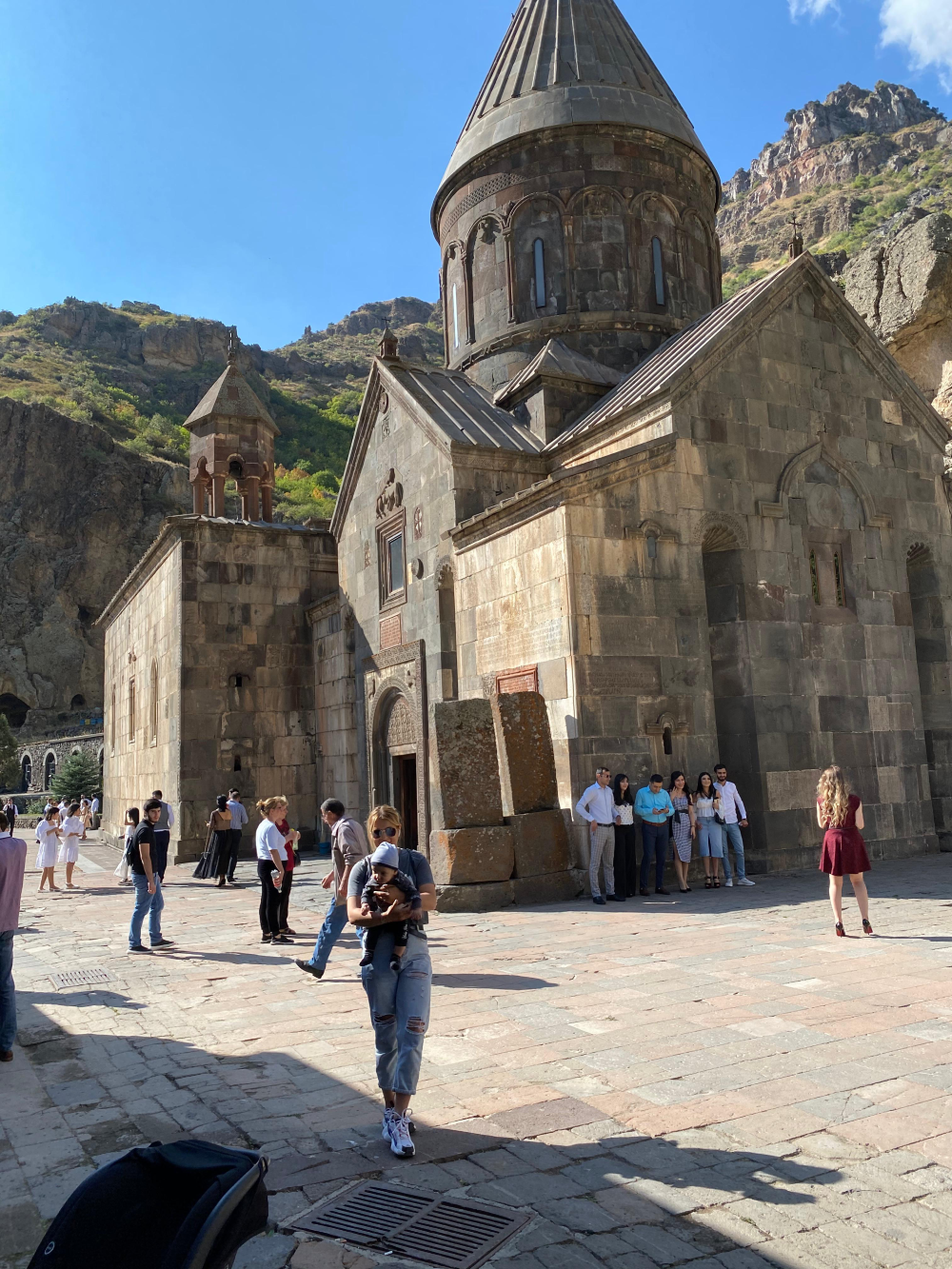
4. Our final stop is the Geghard Monastery, a partly cave-carved monastery dating back to the 13th century. “Geghard” means “spear” – a reference to the spear that pierced the body of Jesus during the crucifixion. The monastery was named after this sacred relic, which was once kept here. Today, the spear is preserved in the religious center of Armenia, the Holy See of Etchmiadzin.
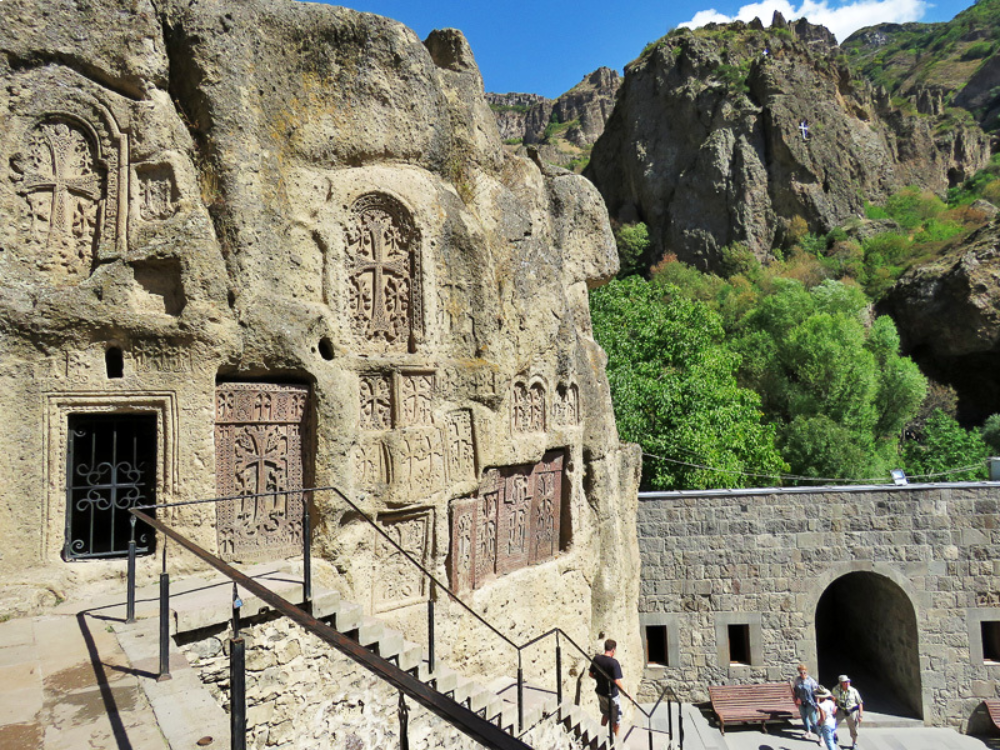
Geghard is set among dramatic cliffs and rivers, and its uniqueness lies in its architecture – a large portion of the complex is carved directly into the rock. The monastery is renowned for its exceptional acoustics, and visitors are often fortunate enough to hear traditional Armenian spiritual hymns performed inside its rock-cut chambers.
All private tours can be changed upon request.
Looking for a more immersive cultural experience? Explore our Garni, Geghard & Lavash Baking Private Tour, which includes a traditional Armenian lavash baking masterclass in addition to the classic sightseeing route.
Is this a private Garni and Geghard tour from Yerevan?
Yes. This is a private tour from Yerevan with a professional guide and driver. You travel only with your own party, allowing you to explore Garni, Geghard and the Symphony of Stones at a comfortable pace.
How long is the Garni, Geghard and Symphony of Stones tour?
The tour lasts approximately 5 hours, including transportation from and back to Yerevan and time to visit each attraction.
What places are included in the tour?
The itinerary includes the Arch of Charents, Garni Temple, the Symphony of Stones in the Azat Gorge and Geghard Monastery, a UNESCO World Heritage Site.
Does the tour include hotel pick-up in Yerevan?
Yes. Pick-up and drop-off from your hotel or accommodation in Yerevan are included.
Are Garni Temple and Symphony of Stones entrance tickets included?
Entrance tickets are not included in the standard tour price. Garni Temple and Symphony of Stones tickets can be added when booking.
Can the itinerary be customized?
Yes. As this is a private tour, the itinerary can be adjusted when possible. Additional stops or experiences can also be requested in advance.
Is the Garni and Geghard tour suitable for children?
Yes. The tour is suitable for families with children. There is some walking at the attractions, including the Symphony of Stones area, so comfortable shoes are recommended.
What should I wear for the tour?
Comfortable walking shoes are recommended. When visiting Geghard Monastery, modest clothing is appropriate. A light jacket can also be useful during cooler months.
Can I book the tour with an English- or Russian-speaking guide?
Yes. Professional English- and Russian-speaking guides are available.
What is the cancellation policy?
You can cancel the tour free of charge up to 24 hours before departure.
This private tour is an excellent choice if you:
Whether you’re travelling as a couple, with family or friends, this itinerary combines Armenia’s rich history with spectacular scenery, making it one of the country’s most rewarding private excursions.
Your private driver and guide meet you at your hotel in Yerevan. Garni is just 28 km from the city — one of the closest great half-day trips available from any capital in the region.
First stop at the most iconic pagan monument in Armenia — the only surviving Hellenistic colonnaded temple in the entire former Soviet Union. Built in the 1st century AD by King Trdat I, dedicated to Mihr the sun god, and funded in part by the Roman Emperor Nero. Destroyed by earthquake in 1679 and meticulously reconstructed between 1969 and 1975. Inside the complex you can also see the royal bathhouse with its extraordinary mosaic floor made from 30,000 individual stones — including one of the only surviving inscriptions in Armenian that reads: we worked and got nothing, believed to be the complaint of the craftsmen who built it. Views from the cliff edge across the Azat River gorge are spectacular.
Walk down into the Azat River gorge to the Symphony of Stones — a dramatic natural formation of thousands of hexagonal and pentagonal basalt columns up to 50 meters tall, created by slowly cooling lava flows millions of years ago. The columns are so geometrically perfect they look like the pipes of a giant cathedral organ, rising from the riverbed. One of the most photogenic natural phenomena in Armenia and one of the most striking geological sites in the entire Caucasus.
Drive 7 km up the gorge to Geghard — one of Armenia's most extraordinary monuments and a UNESCO World Heritage Site. Part of the monastery is carved directly into the living rock of the cliff face — chambers, chapels and khachkars cut from the stone itself. Founded in the 4th century and rebuilt in the 13th century, Geghard once held the spear that pierced Christ's side at the crucifixion, brought here by the Apostle Thaddeus — giving the monastery its name Geghardavank, Monastery of the Spear. The acoustics inside the rock-cut chambers are extraordinary.


Клаасно прлвели день